A Listening Anchor: Follow One Sound Through a Live Piece
A listening anchor gives you a simple thread through unfamiliar live music, helping you notice changes, returns and relationships without reading a score.
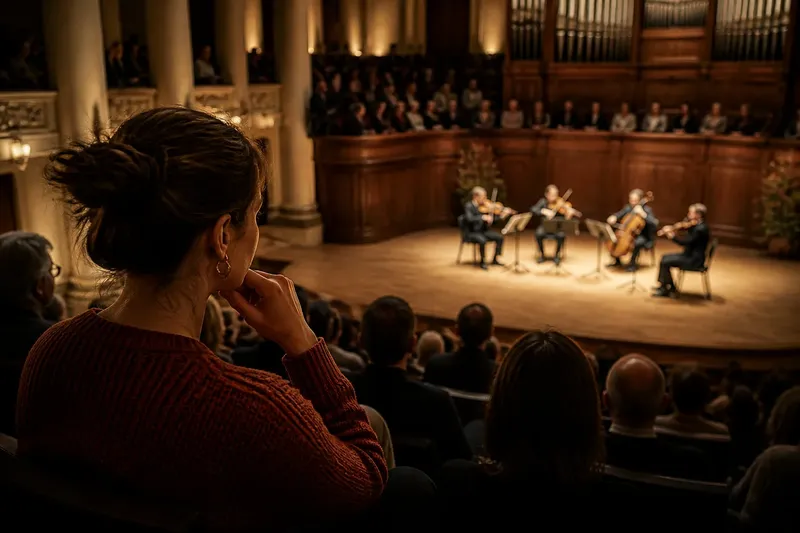
Choose one recurring sound, and unfamiliar live music becomes easier to follow without a score or a store of musical knowledge. A listening anchor might be a low pulse, a bright flute tone, a repeated rhythm or a short phrase that keeps returning. You are not trying to understand everything. You are giving your attention one place to begin.
The idea is useful because a performance can change direction faster than a newcomer can name what is happening. A sound you have already noticed offers a point of reference: it may continue, disappear, change hands or come back in a different form. Those shifts can make a piece feel connected, even when its structure is not obvious.
What an anchor does
A listening anchor is a sound you choose to follow for a while. It is not necessarily the main melody, the loudest instrument or the composer’s intended guide. It is simply a musical feature that your ear can recognise again.
Think of it as a thread rather than a map. A map would tell you where the whole piece is going; an anchor only helps you notice what happens around one sound. That smaller task leaves room for surprise. You can hear a bass note recur while also noticing that the texture above it has become busier, or follow a pulse as it shifts from one instrument to another.
The anchor need not stay interesting for the entire performance. It may be clear at the start and then become hard to hear. That is not failure. It has already helped you attend to the music, and you can release it or choose another sound when the piece changes.
Choosing a sound
Pick something you can recognise by its character, not by a technical name. You might notice a low, rounded sound; a dry tapping rhythm; a long, wavering tone; or a short figure that seems to answer another instrument. If you know the instruments, you can follow a cello, clarinet or drum. If you do not, describing what you hear is enough.
At a concert, the same instrument may blend into a larger sound, and several instruments may share a similar colour. It helps to choose a sound with a noticeable quality: unusually high, steady, clipped, sustained, rough or regular. A rhythm can be easier to track than a tone, especially when the players move between notes quickly.
Listen briefly before committing. Let the opening establish what is present, then ask yourself which sound you can find again. If no single line stands out, follow a broader feature, such as the regular beat or a repeated rise and fall. A listening anchor is a choice, not a test of whether you can identify instruments correctly.
Try not to select a sound solely because it is loud. A sudden crash may catch your attention but not recur. A quieter pattern can make a better anchor if it appears often enough to be recognised. Nor must you know whether the composer wrote it as a theme, accompaniment or motif. Those labels can be interesting, but they are not needed for this kind of listening.
Following its changes
Once you have a candidate, notice three simple things: where it appears, what it does, and what changes around it. The sound might stay in one instrument, pass to another, become louder, stretch into longer notes or break into shorter ones. You can register these changes in ordinary language rather than trying to name a formal musical technique.
Imagine you are hearing a string quartet for the first time and notice a short, rising figure in the violins. At first it is played lightly; later, the viola seems to answer it with a lower version, while the cello keeps a steady pulse beneath both. You might listen for the rising figure’s next appearance and notice whether it returns unchanged or joins the lower answer. That is a complete, useful way to follow a passage, even if you cannot identify its key or explain its structure.
Sometimes the anchor’s most interesting feature is its absence. A pulse you had been following may drop away, leaving a held note or a stretch of silence. Notice how the music feels without that support, then listen for whether it returns. The pause is not empty information: it changes the relationship among the sounds still present.
A recurring sound can also alter its role. A pattern that first sat quietly beneath a melody may later take the foreground. A phrase that seemed to belong to one instrument may be echoed elsewhere. Following the sound can reveal these changes in attention and balance, not just repetitions.
When the sound moves
In ensemble music, a musical idea may pass between players. The exact instrument can be difficult to distinguish, particularly in a reverberant hall or a dense passage. Follow the shape or rhythm instead. If a short-short-long pattern appears first in the upper strings and then seems to surface in the woodwind, the relationship matters more than naming every player.
For solo music, an anchor might be a repeating left-hand pattern, a recurring leap in the melody or a contrast between a sustained note and quick figures around it. In a song, you might follow a recurring vocal phrase or the way a drum pattern shifts when the voice changes. The method adapts to the music; it does not depend on a particular instrument or genre.
If the sound becomes difficult to locate, resist the urge to search frantically. Let your attention widen for a moment. Listen to the overall texture, then return to the anchor if it becomes clear again. You can also switch to a different recurring feature. Moving your attention is part of listening, not a sign that you have lost your place.
Questions about anchors?
Do I need to know the instruments?
No. You can describe a sound by its register, texture, rhythm or shape, such as “low and steady” or “a quick rising figure”. Instrument names can help if you know them, but recognition is more important than terminology.
Should I follow the melody?
Only if the melody is the sound you can most readily recognise. A bass line, repeated rhythm or brief instrumental response may provide a steadier thread, particularly when the melody changes frequently.
What if I lose the sound?
Let it go temporarily and listen to the broader musical texture. If the sound returns, you can pick it up again; if it does not, choose another recurring feature or simply listen without an anchor.
Can I use an anchor for any kind of music?
Yes, though the most useful feature will differ. A song may offer a returning vocal phrase, while an instrumental work may make a rhythm, tone colour or repeated gesture easier to follow.
Keep the task light
It is possible to turn the idea into too much work. Trying to track several instruments, remember every entrance and decide what each change means can crowd out the sound itself. Choose one anchor, notice a few changes and allow the rest of the piece to arrive without an assignment.
It is also not worth spending the whole performance on exact labels. If you are unsure whether a tone belongs to an oboe or a clarinet, the uncertainty need not interrupt your listening. “A reedy sound near the front of the texture” may be all you need. Precision matters only when it helps you hear something you would otherwise miss.
You may find that the anchor changes as the piece unfolds. A recurring pulse can guide you through the opening, then a repeated melodic shape may become more prominent. You are free to move your attention. The aim is not to keep one sound in view at all costs, but to use it as an entry into the music.
After the performance
When the piece ends, you can recall the path of your anchor in a few plain words: it began quietly, moved to another instrument, disappeared, then returned over a stronger pulse. That small account gives you something concrete to remember, without requiring a formal analysis.
Next time you hear unfamiliar live music, try a listening anchor for one passage rather than the entire concert. Notice what repeats, what changes and what becomes easier to hear once you have a point of reference. The sound you follow may not explain the piece, but it can make the performance feel less like a stream of unrelated events and more like music whose parts are in conversation.