The Seat-View Myth: Why a Clear Sightline Is Not the Whole Experience
Concert seat choice is about more than sightlines: weigh sound, comfort and attention to choose a place that suits how you want to listen.
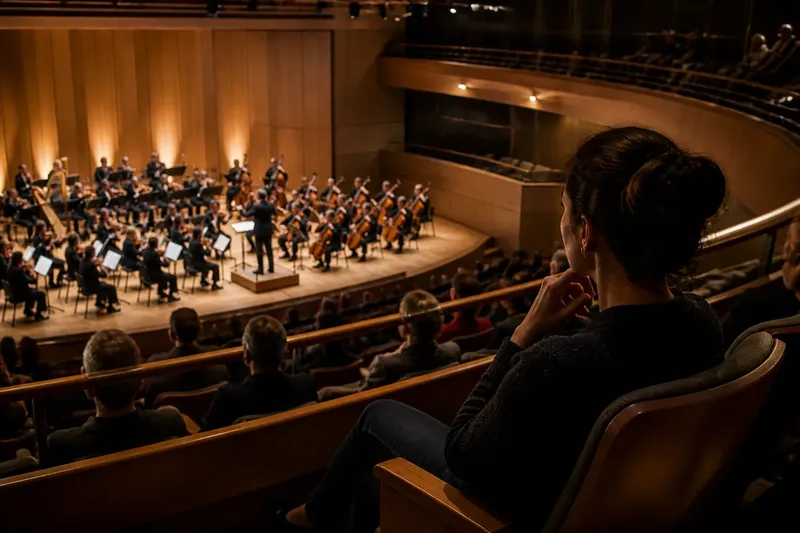
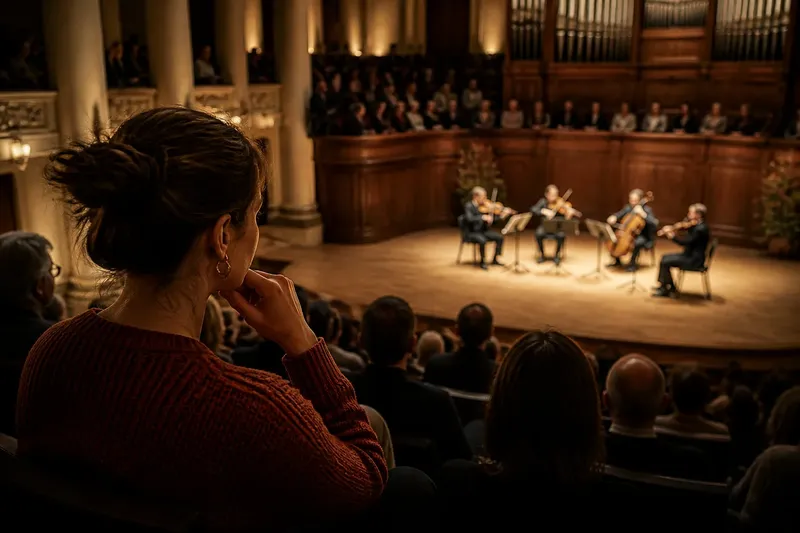
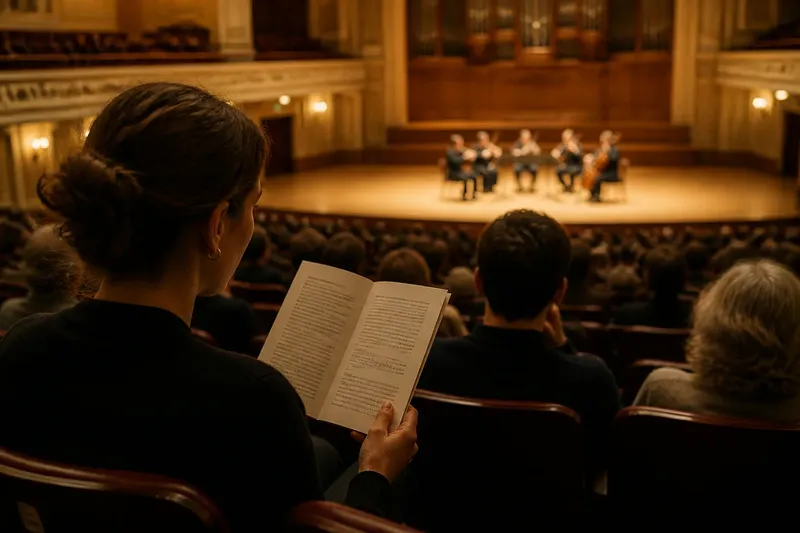
A clear view is only one part of a good concert seat. Concert seat choice also shapes what you hear, how comfortably you can sit, and whether watching the performers helps or distracts you. A place that looks ideal in a seating plan may not suit the way you want to experience the music.
What makes a seat good?
A good seat supports the kind of attention you want to bring. If gestures and coordination matter to you, seeing the performers can deepen your interest. If you prefer to follow the overall sound, a partial view may matter less than a position where the music feels balanced and easy to attend to.
Think of sight, sound and comfort as separate considerations, not as features that always rise and fall together. A seat can offer an unobstructed view but leave you craning your neck. Another may conceal some detail while letting you settle into the performance without distraction.
Before choosing, ask what you want to notice. Are you curious about how a group responds to one another? Do you want to watch a soloist’s hands? Or would you rather close your eyes at times and listen without needing to track the stage? Your answer changes what “best” means.
Does a clear view mean better sound?
No. Seeing the stage clearly does not tell you how the music will reach your seat. Sound can feel different across a room because of the room’s shape, the position of the performers and the way the music is arranged. A seating map usually communicates location more readily than it communicates how listening there will feel.
For an ensemble, some listeners value a sense of blend: the impression that separate instruments belong to one musical picture. Others enjoy hearing individual parts stand out. Neither preference is a flaw, and a seat that suits one listener may not satisfy another.
When venue information describes sections or acoustic features, treat it as a clue rather than a promise. If you can ask the box office a question, make it specific: is the view restricted, is the seat close to a wall, or is the stage partly obscured? Those details are more useful than asking for the single best seat.
How should sound and sight be balanced?
Give the most weight to the sense that will help you stay engaged, then check that the other conditions are acceptable. Someone who follows a conductor’s cues may favour a visible stage. A listener who likes to attend to the full texture may accept a less direct view if the seat still feels comfortable and the sound is appealing.
Imagine you are choosing between two available seats. One has a direct view but requires you to turn slightly towards the stage; the other has a less complete view but lets you sit facing forward. If you know that holding an awkward posture quickly pulls your attention away, the second may suit you better. If seeing the performers is central to your enjoyment, the first may be the more satisfying choice.
That is not a universal ranking. It is a way to make the decision from your own listening habits rather than from a simple view-first rule.
What should I check before booking?
Is the stage fully visible?
Check whether the seat has a restricted or partial view, and ask what that restriction means in practice. A small obstruction may be unimportant if you mainly want to listen; a blocked view of a performer you hope to watch may change your choice.
Will I be comfortable sitting there?
Consider whether the seat’s position, legroom information or need to turn might bother you. If comfort is likely to occupy your attention, a slightly less striking view may be the wiser option.
What do I want to watch?
Different performances reward different kinds of looking. If you want to follow exchanges across a group, look for a view that keeps those performers in sight; if you mainly want the broad musical impression, an unobstructed view of every detail may not be necessary.
Can I change my choice later?
Check the booking terms before selecting a seat, particularly if your plans or access needs may change. Where the right choice depends on a venue’s seating details, its booking information or staff can clarify what the map does not show.
Do balconies and side seats matter?
They can, but the label alone does not settle the question. A balcony may provide a broad perspective that makes a large group easier to see together. A side position may bring some performers closer while making others harder to see. These are possibilities to weigh, not fixed rules about every room.
Use the seating plan to understand orientation and obvious restrictions, then consider how much you rely on seeing detail. A distant view may still be satisfying if you prefer the larger shape of the performance. If facial expression or precise movement is important to you, distance may be more noticeable.
It is not worth spending hours trying to extract a perfect answer from a diagram that cannot describe your personal response to a room. A focused check for restrictions, orientation and comfort is more useful than treating every seat as a puzzle with one correct solution.
Can a less visible seat still work?
Yes, if its limitations do not interfere with what you most want from the concert. A seat with a partial view can still allow close attention to the music, and even a strong view will not hold your interest if discomfort keeps pulling you away. The best compromise is the one whose drawbacks you can accept without continually thinking about them.
For concert seat choice, make the decision around your own priorities: what you want to see, what kind of sound you enjoy, and what lets you sit at ease. If those questions point to different seats, choose the quality that matters most for this particular performance. There is no need to defend that preference as the best one for anyone else.
One final useful check is to imagine the quiet moments as well as the loud ones. If you can picture sitting still, listening and looking in a way that feels natural, you have a more meaningful reason for choosing than a clear sightline alone.