Programme Notes or No Notes? Two Ways to Meet Unfamiliar Music
Programme notes before or after a concert can shape your first impression; choose the order that suits your curiosity, attention and appetite for surprise.
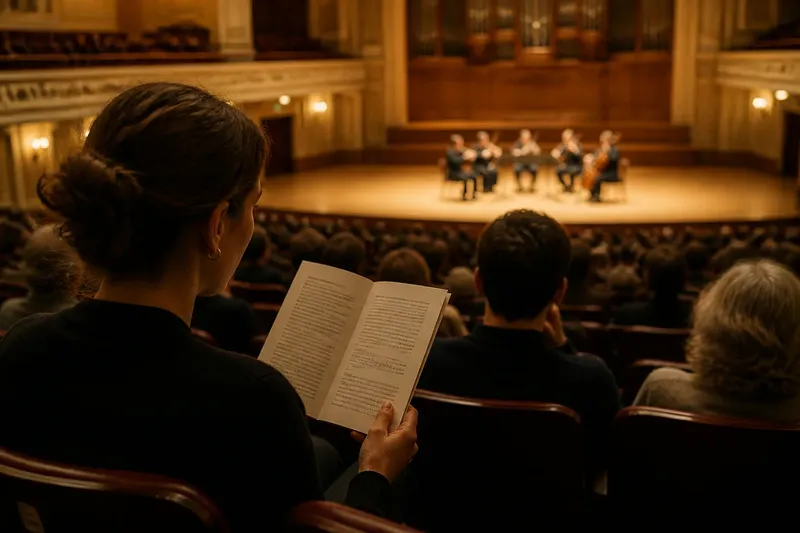
Programme notes before or after a concert can change what you notice, even when the music itself is unchanged. Reading a little beforehand gives unfamiliar sounds a frame; waiting until afterwards lets your first impressions form without one. Neither order is the more attentive choice. The useful question is what you want from this particular performance.
Choose your first encounter
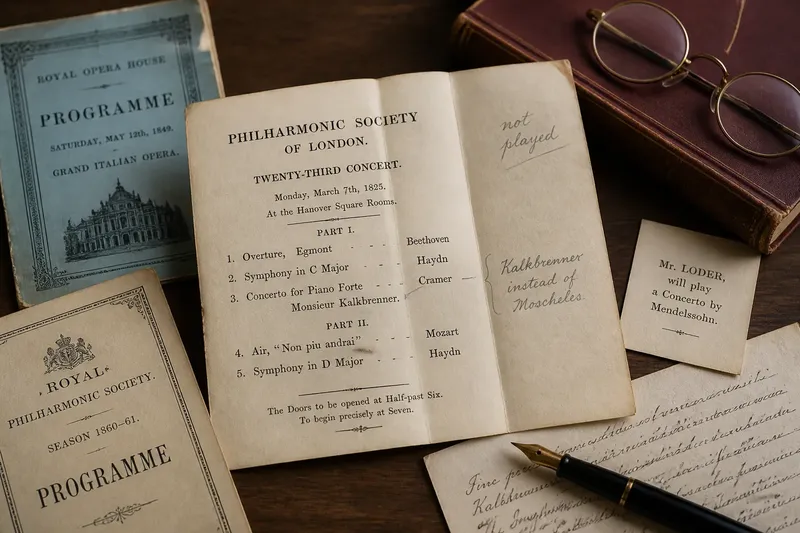
A short note can identify the composer, the work’s basic setting and a few things worth listening for. That can make an unfamiliar piece feel less like a sequence of unexplained events. It can also direct your attention towards details the writer considers important, before you have decided what matters to you.
Listening first reverses that order. You hear the music without a printed account suggesting what it means or where its important turns lie. Afterwards, a note can supply context and give names to features you heard—or missed—without having to confirm a predetermined interpretation.
In practice, the choice often depends less on the piece than on your circumstances. A listener who is unsettled by not knowing what to expect may welcome a small amount of context. Someone who enjoys forming an independent impression may prefer to leave the programme closed until the applause.
Read before the concert
Reading first suits you if unfamiliar music can feel difficult to enter without a point of orientation. A concise note may explain that a work is built around a particular contrast, uses an unusual group of instruments, or belongs to a form with recognisable sections. These are clues, not instructions to listen correctly.
This order can also help if you have little time to settle once you are in the room. Reading on the train or in the foyer gives you a chance to learn a few names and then put the page away. You do not need to memorise a plot or follow every musical reference while the performance is under way.
Choose advance reading if you are likely to keep wondering about basic context instead of attending to the sound. A note can explain who is speaking in a vocal work, what a title refers to, or why a piece uses an unexpected ensemble. If the programme contains several works, read only the passage for the one that feels most unfamiliar.
Keep the reading light. A short description is usually more useful before the concert than a dense account of compositional technique, especially if those terms are new to you. Read for orientation, then let the performers and the music take over.
Listen before reading
Waiting suits you if the pleasure lies in discovering how the music unfolds before anyone tells you what to expect. You may notice a change of mood, a recurring sound or an ending that surprises you. Those observations belong to your encounter, even if a note later offers a different explanation.
This approach is particularly appealing when a programme note makes strong claims about a work’s mood or meaning. Words such as “triumphant” or “restless” can colour what follows; a listener who wants to decide whether those descriptions fit may prefer to hear the piece first. The programme can then become a second conversation rather than a set of advance directions.
Listening first also works when you have no wish to prepare for every item on a long programme. You can arrive with your attention available, experience the concert as it comes, and read afterwards only about the work that has stayed in your mind. Curiosity does not have to be satisfied in advance to count as preparation.
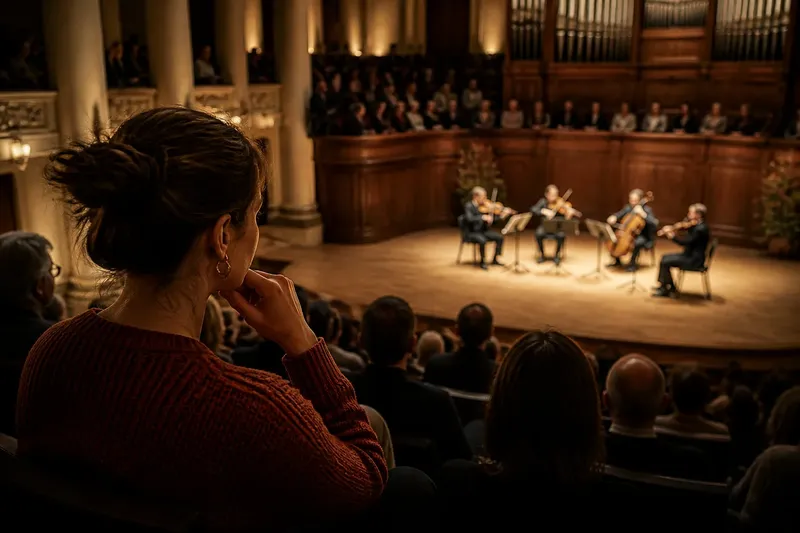
Say you are attending a concert with an unfamiliar string quartet and you are drawn to the sound but wary of being told what to feel. You could leave the note folded during the performance, then read it at home and compare its description with the moment you remember most clearly. The expected result is not agreement; it is a more specific sense of what caught your attention and what the note adds.
Match the order to your mood
Some listeners benefit from choosing separately for each work. Read before a piece whose context you genuinely want, and leave another for later if surprise is part of its appeal. There is no need to make one rule govern an entire evening.
Your available attention matters, too. If you are tired, anxious about finding your seat or arriving directly from a demanding day, a brief note beforehand may reduce the number of unknowns. If reading would feel like another task, skip it. The concert does not require a preparatory assignment.
Consider how you usually respond to interpretation. If a few sentences make you eager to listen for a feature, read in advance. If they make you feel that you ought to identify the feature or have the “right” response, keep the note for later. A programme is a companion, not an assessment.
It is not worth trying to read every essay, learn every unfamiliar term or keep the programme open throughout a performance. That effort can turn attention away from the sound without adding useful context. A single question you want answered is enough reason to consult the page.
What should you read?
How much programme information is enough?
Before the concert, a few sentences about the work’s setting or structure may be plenty. Look for information that answers a question you already have, then stop before the note becomes a running commentary.
Should you read about the composer first?
Read a brief biography if the person’s circumstances are relevant to your curiosity, but do not treat biography as a code that unlocks the music. A work can matter to you without knowing the composer’s life story.
Can you read programme notes during a performance?
For most listeners, reading during the music divides attention and makes it harder to follow the sound. If you want the notes nearby, check the page between works rather than trying to read while performers are playing.
What if the notes disagree with your impression?
Keep both responses in view. A writer’s account can offer context, but your own reaction is not invalidated by a different description; the contrast may be the most interesting part of reading afterwards.
Use a flexible routine
A simple routine can preserve both orientation and surprise: scan the programme before entering, read only the details that answer a real question, then close it for the performance. If a particular work leaves you curious, return to its note afterwards. You can adapt that routine by skipping the first scan when you want a fully unframed encounter.
If you are attending with someone else, agree on the order without turning it into a test of musical knowledge. One person may enjoy a little context while the other prefers to listen first. Sharing what each of you noticed afterwards can be more revealing than trying to reach the same interpretation.
Programme notes before or after a concert are best treated as two different invitations: one to arrive with context, the other to reflect with it. Choose the order that suits your curiosity today, not the one you think a serious listener is meant to choose. If your preference changes from one concert to the next, that is a useful response to the music, not an inconsistency.